It looks ancient. Its story is modern.
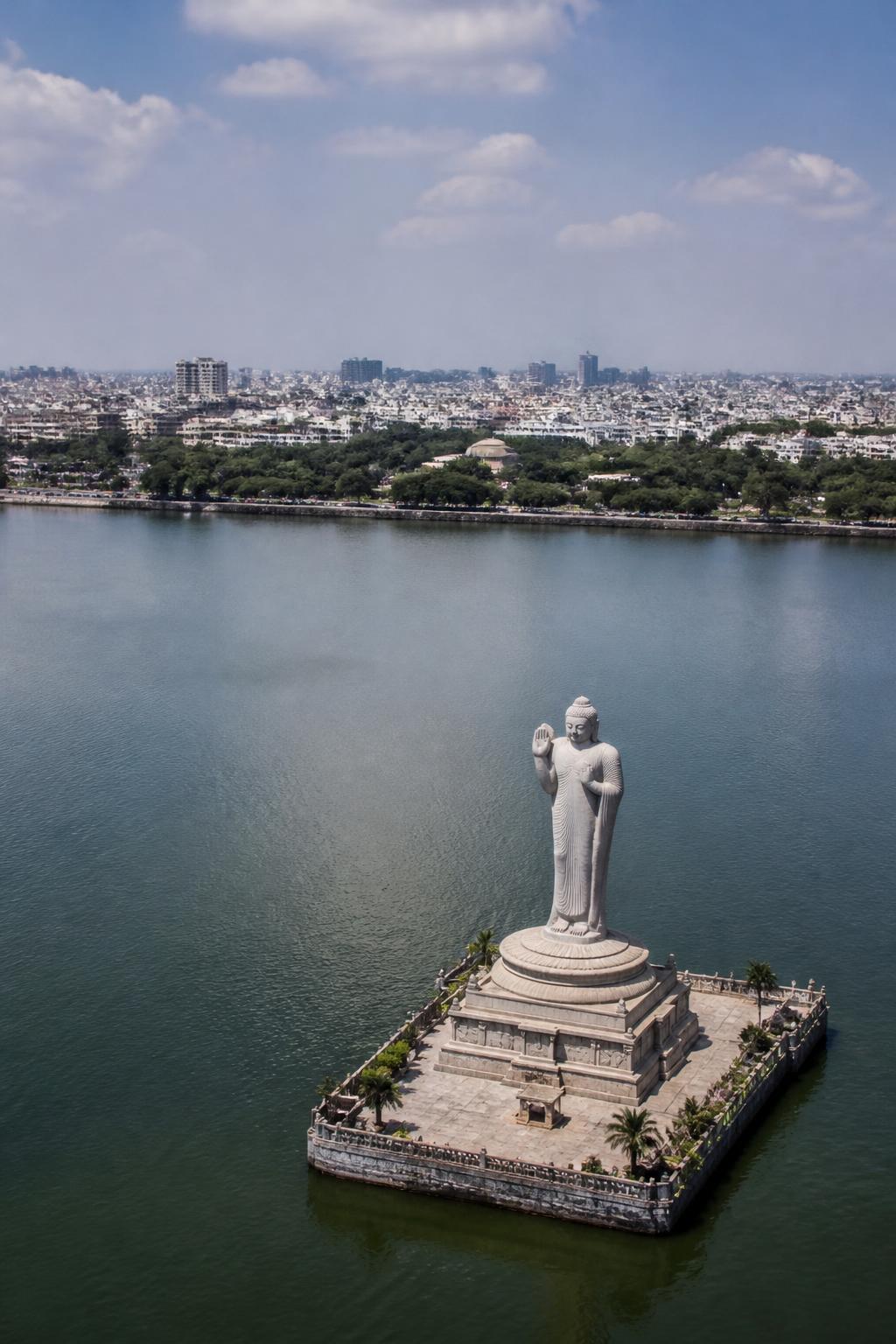
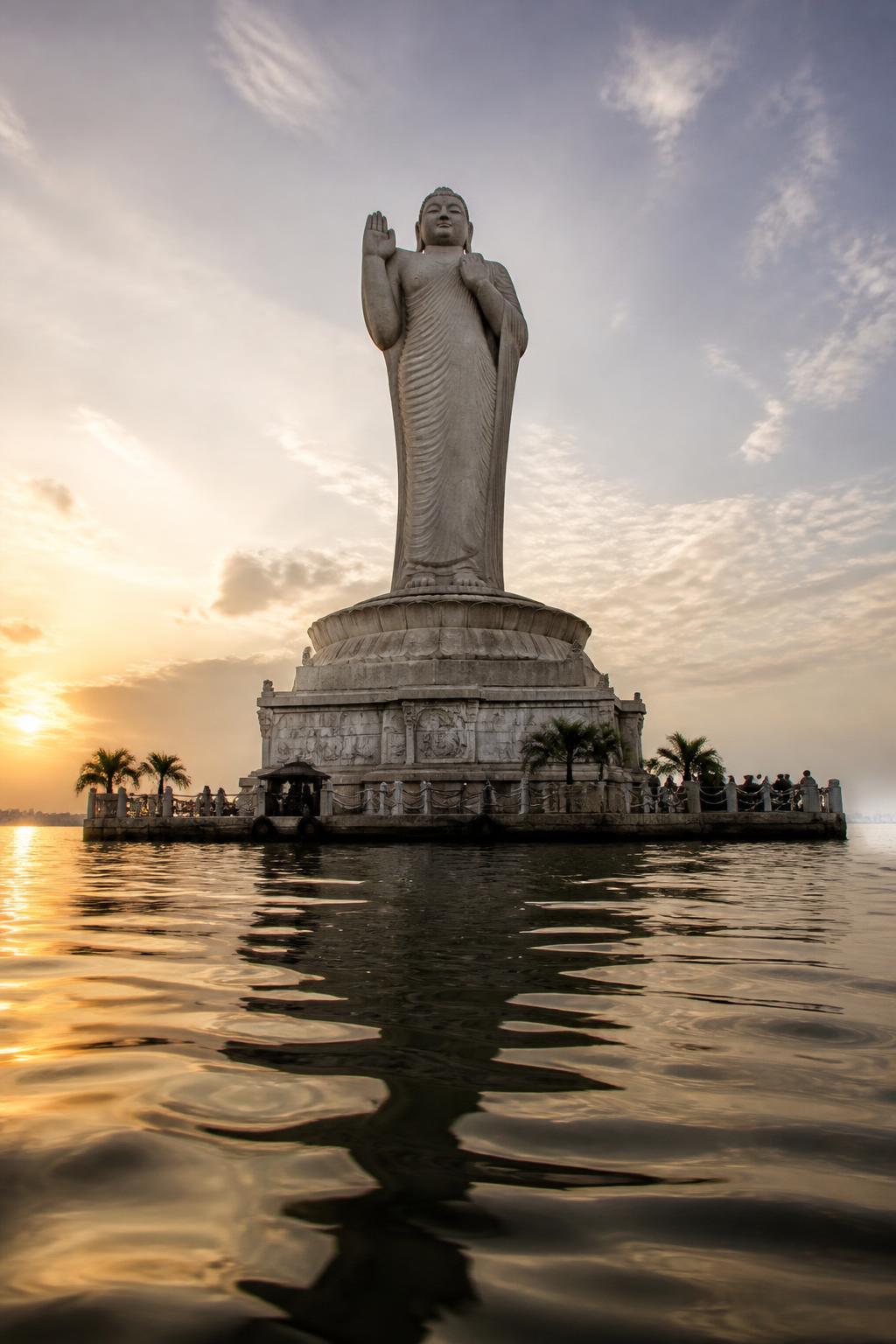
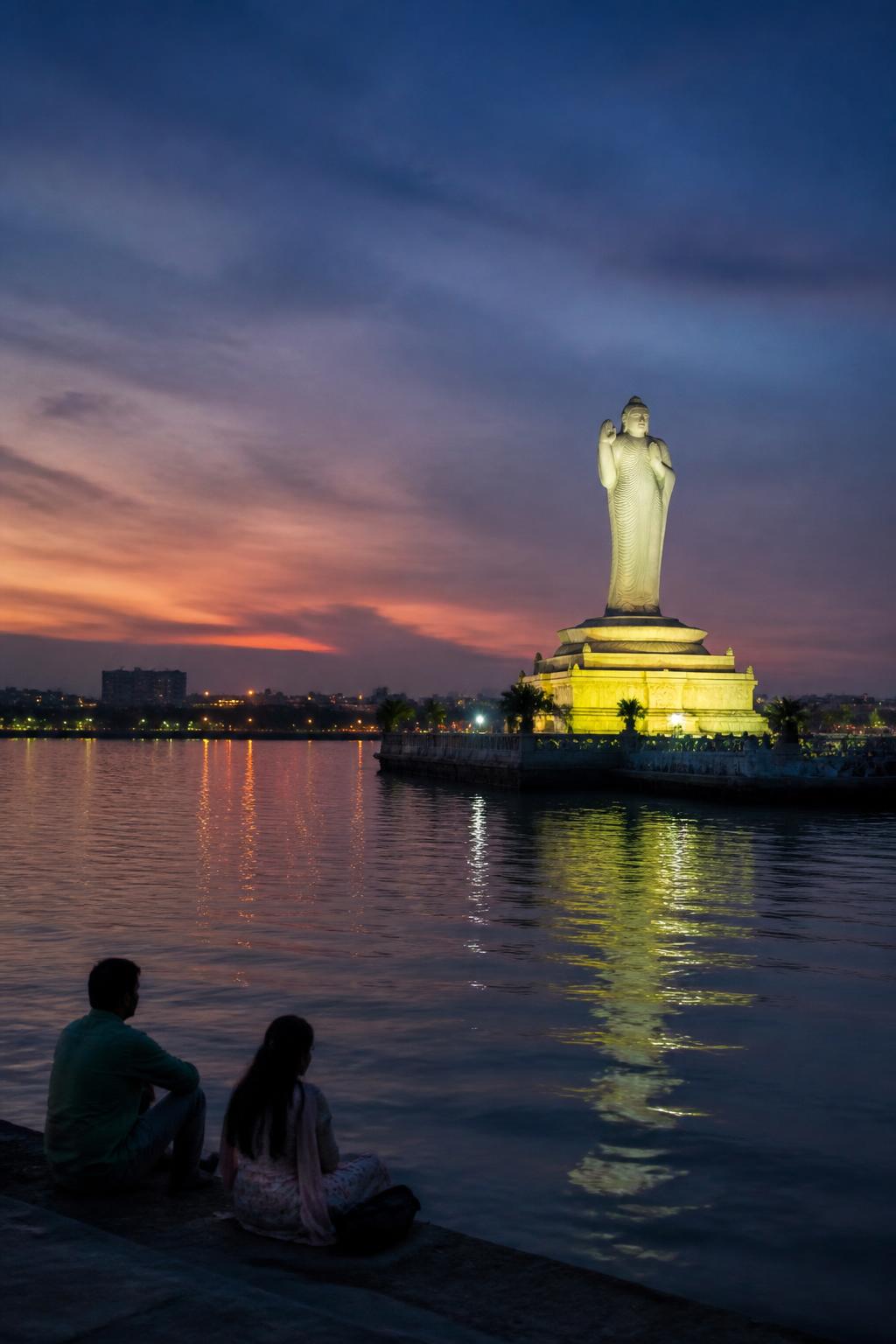
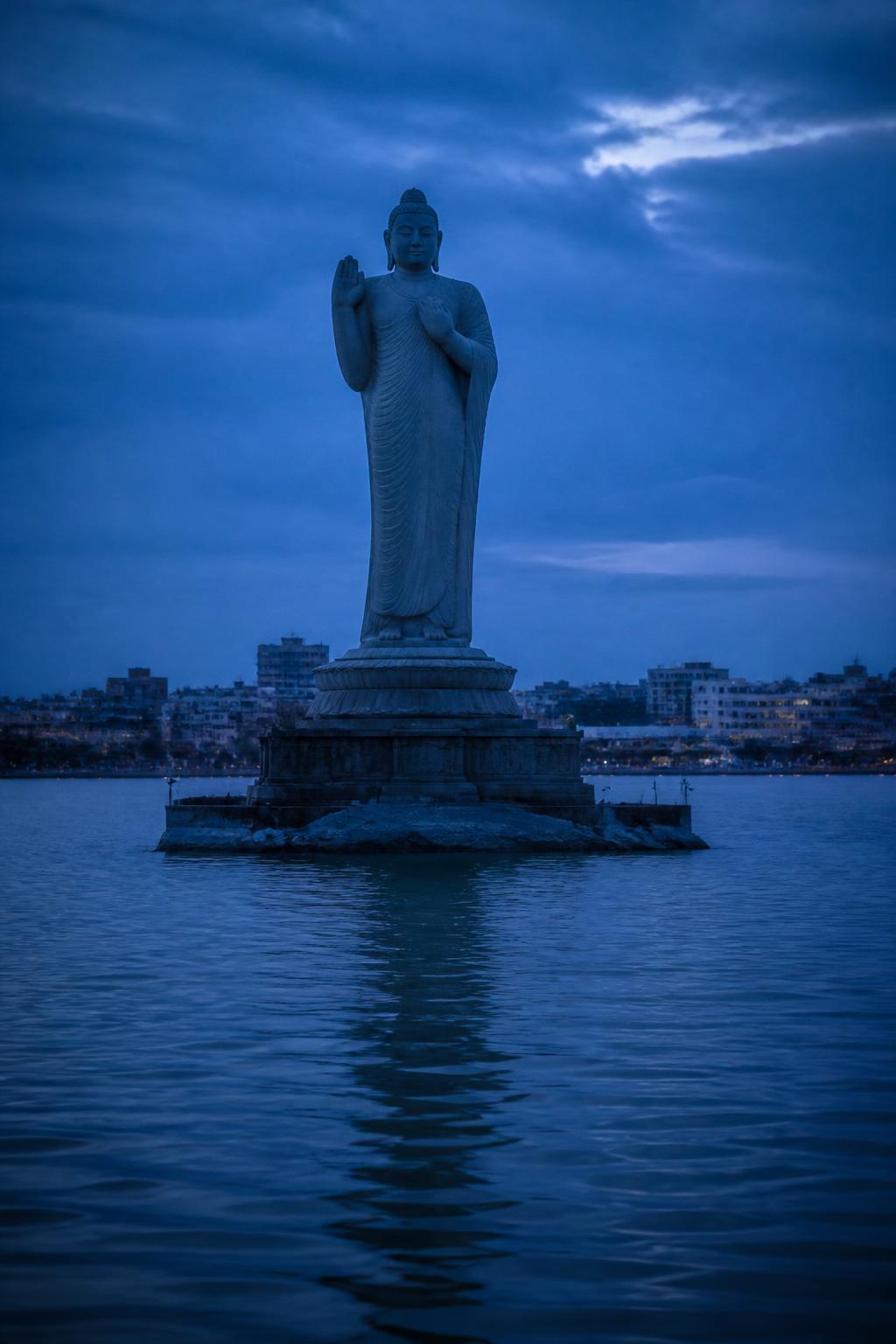
The Buddha standing in the middle of Hussain Sagar can feel like an old sacred landmark, but it is a modern Hyderabad project. N. T. Rama Rao envisioned the monument after seeing the Statue of Liberty and described it as his contribution to society. The idea was not simply to place a religious figure beside the lake. It was intended as a civic symbol and a statement of regional identity. Its form was designed to evoke ancient Buddhist sculpture from Andhra Pradesh, even though Hyderabad itself did not have a major Buddhist monument tradition. That tension is part of the statue’s character: it borrows the visual language of an older past while telling a distinctly modern story about public ambition, identity and place.
A single block had to cross a city
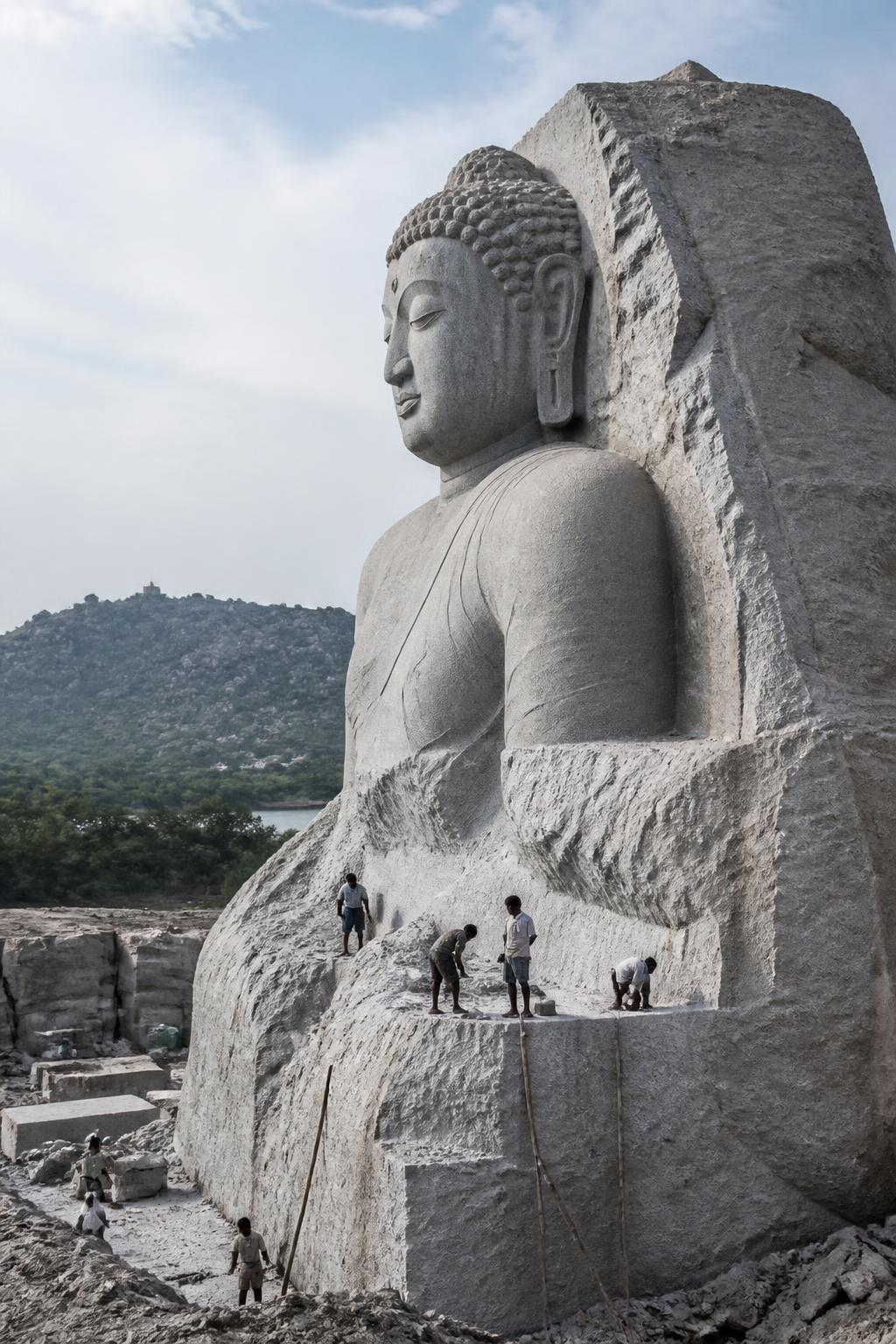
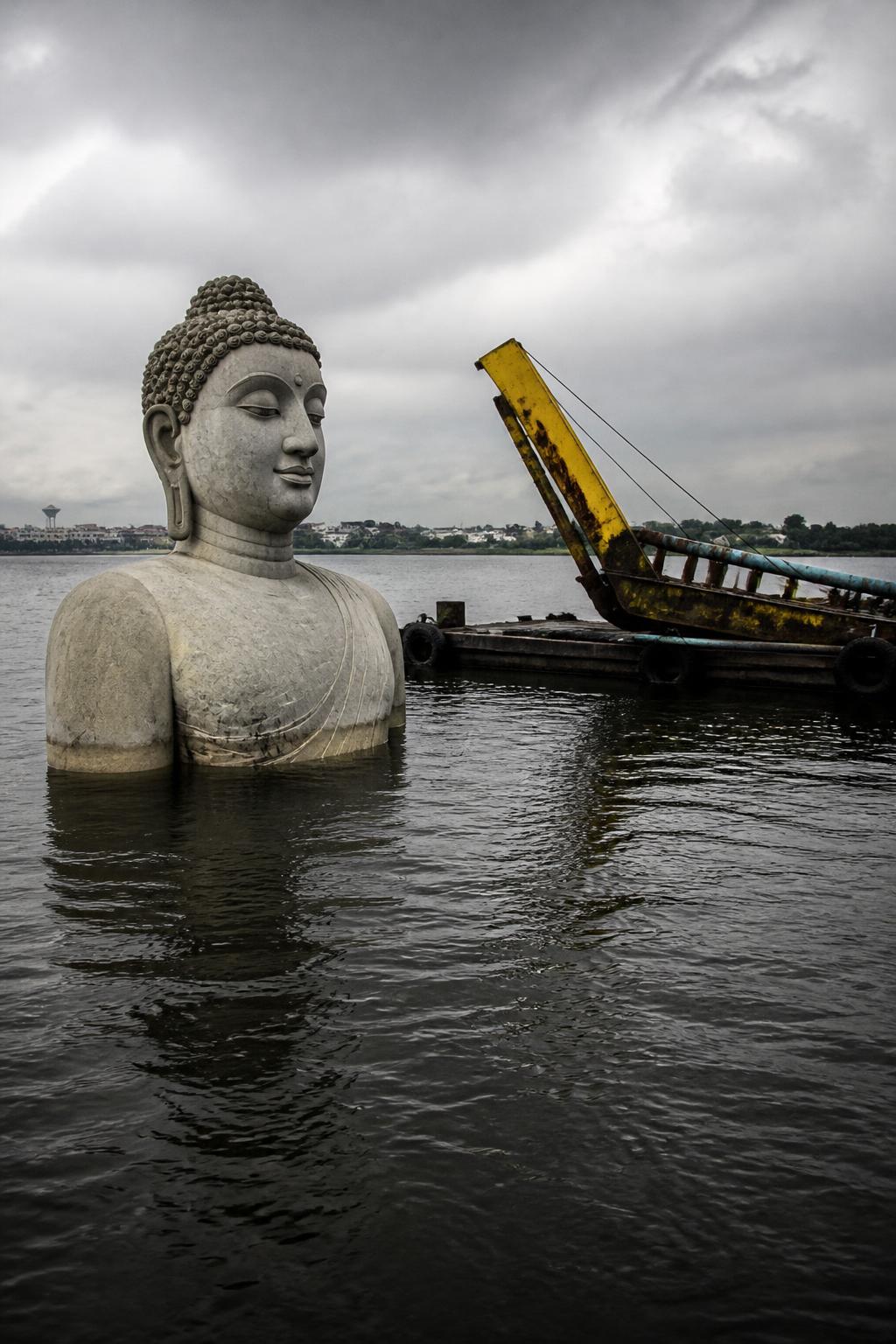
The statue was carved near Raigiri, outside Hyderabad, from a single block of white granite. At roughly 18 metres tall and weighing hundreds of tonnes, it was not an object that could simply be delivered and set down. Its movement became a city-scale undertaking. Roads and routes were widened so the monolithic Buddha could be transported through Hyderabad toward Hussain Sagar. That journey is easy to overlook once the statue is standing still on its platform. But the finished landmark began as an immense piece of stone whose route through the city had to be made possible. Its presence in the lake was therefore the final stage of a project involving design, quarrying, transport and engineering.