The domes are only half the story
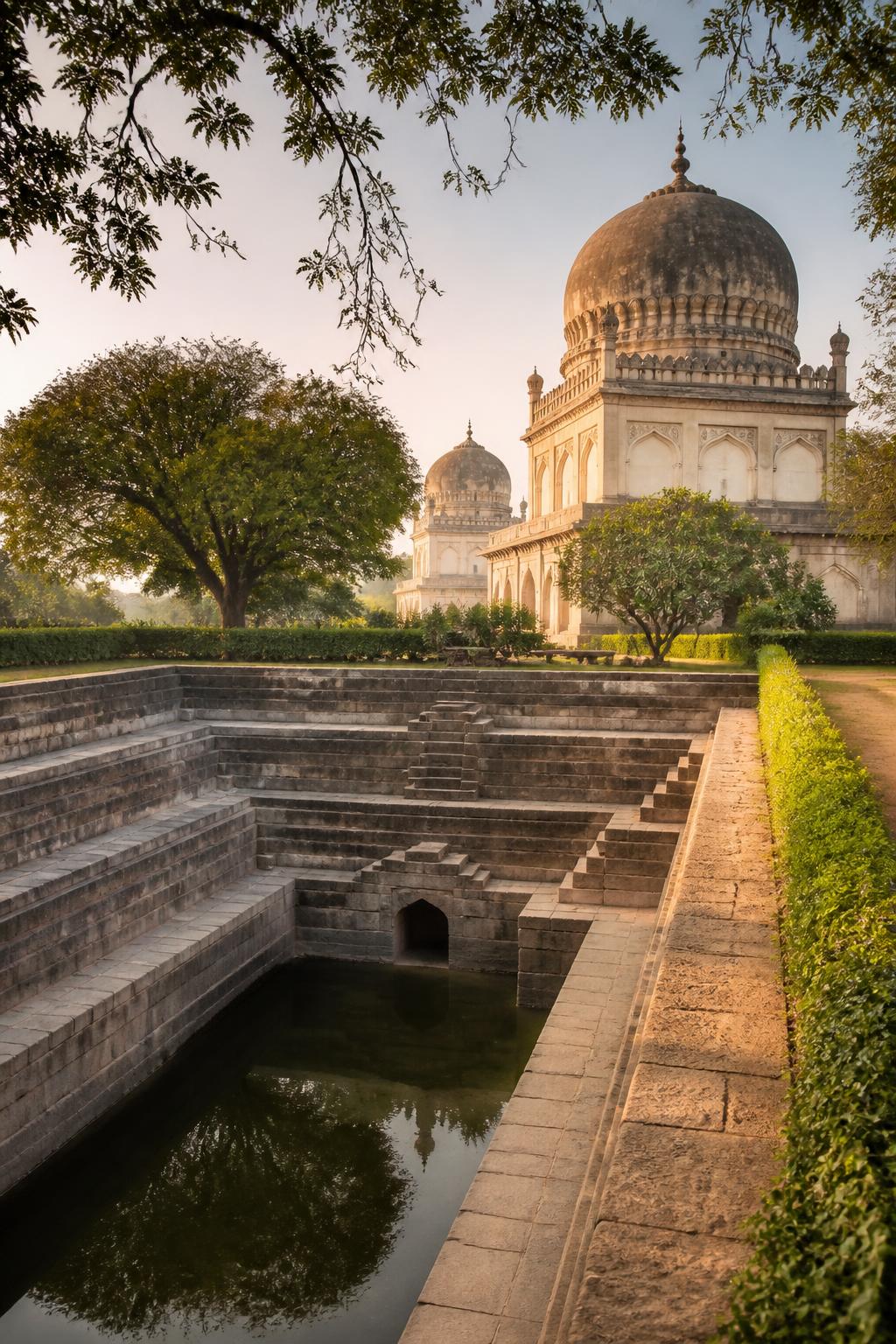
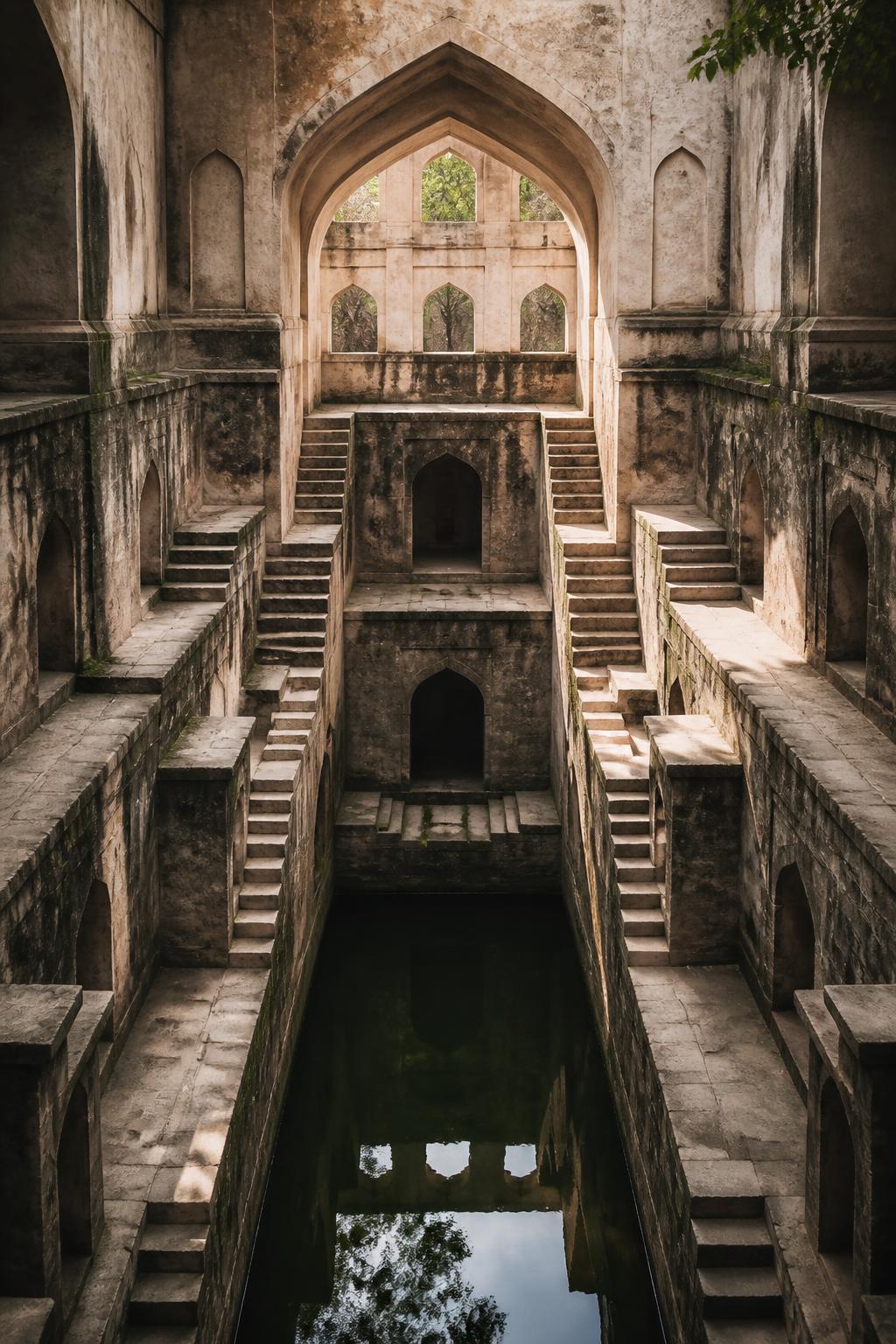
Visitors usually encounter the Qutb Shahi Tombs as a cemetery of domes, gardens and royal memory. But the complex was also a carefully engineered landscape. Its enclosed gardens and orchards were supported by six large baolis—stepwells or reservoirs—alongside aqueducts, tanks, pipes and buried channels. The result was a setting where architecture and water management worked together. What looks like a tranquil funerary garden was also an infrastructure system, much of it hidden below the ground.
Royal landscapes needed reservoirs
The baolis were not decorative additions to the tombs. They stored water for irrigating the orchards planted around the monuments. This gives the gardens a different meaning: their greenery depended on structures designed to collect, hold and distribute water. The tomb precinct was therefore both a place of remembrance and a managed landscape, with its visual calm supported by substantial hydraulic planning.
Excavation found a buried network
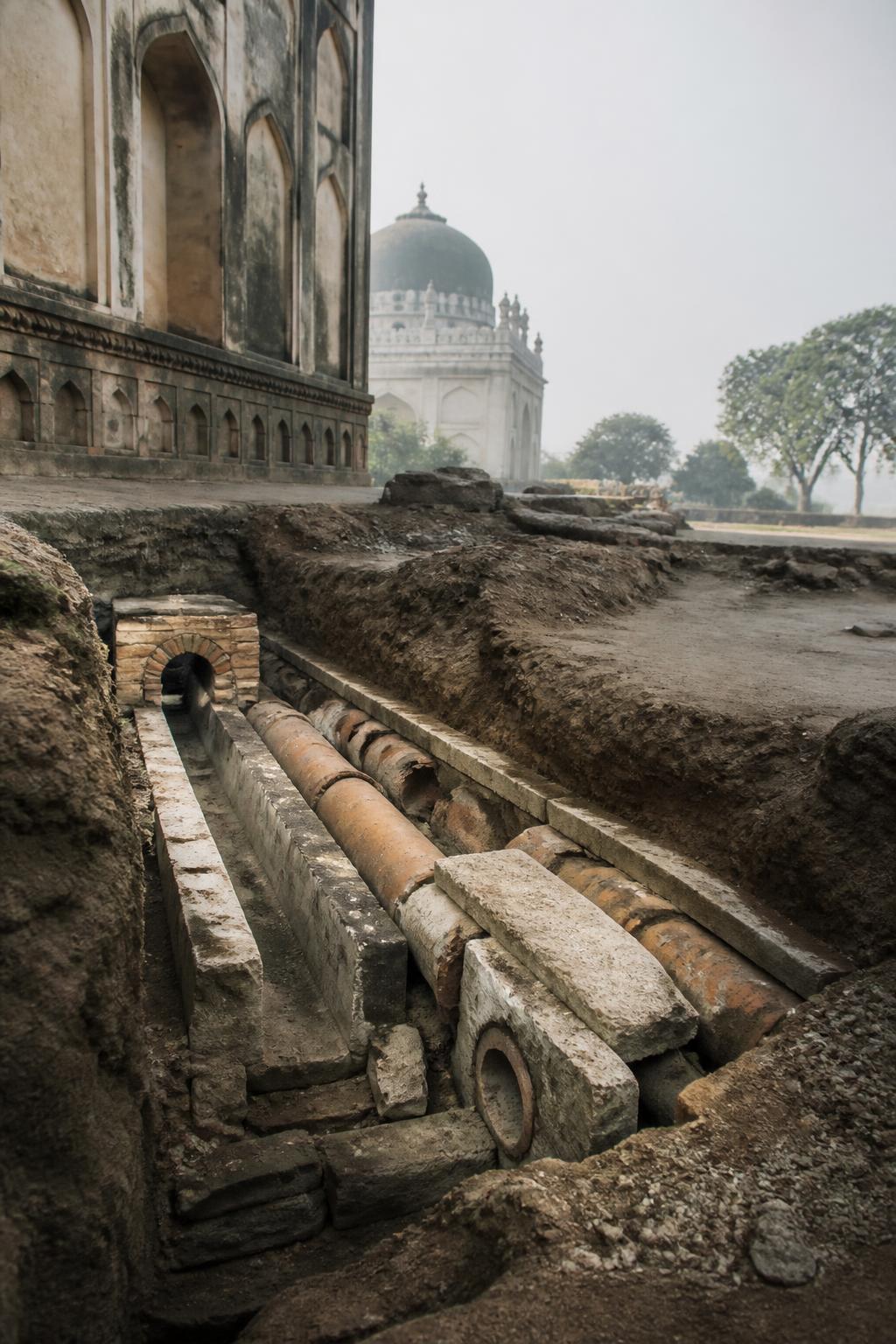
Archaeological excavation revealed how much of the system was concealed. Records describe aqueducts, water tanks, underground aqueducts and terracotta pipes, as well as a drainage channel nearly six feet deep near the Noor Mosque. These discoveries shift attention from the domes above ground to the network below them. The waterworks were not a single feature, but a connected landscape of storage, movement and drainage.