A private observatory became a public institution
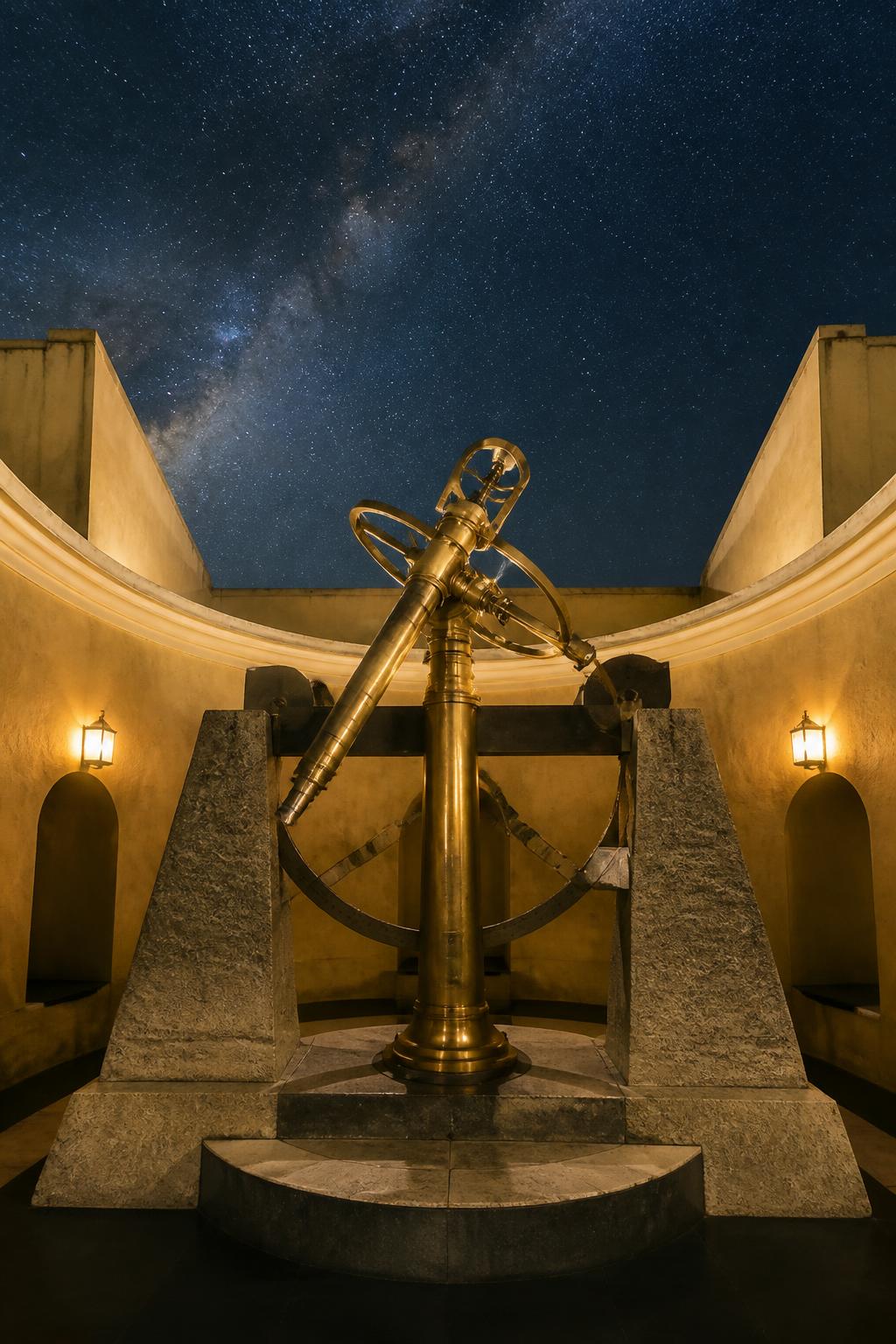
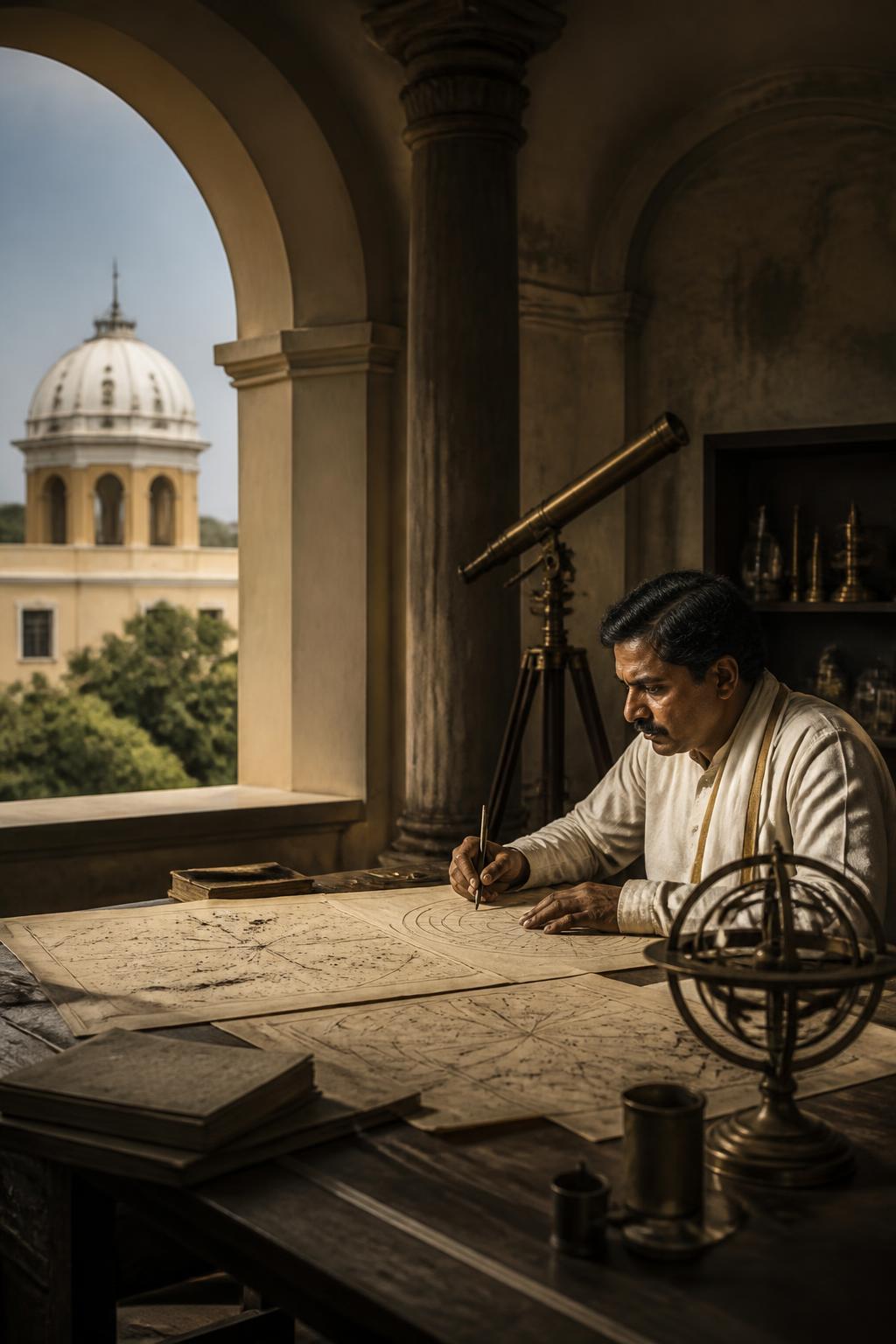
The story begins in Madras in 1786, when William Petrie began observations at his private observatory. The project did not remain private for long: the East India Company completed an official observatory building by 1792. Its stated purpose was broad—promoting astronomy, geography and navigation in India—with accurate longitude determination among its earliest priorities. That combination made the site more than a place for looking at stars. It was part of a practical scientific effort to establish position, measure distance and support the work of mapping and surveying.
The sky helped map the land
The observatory’s work connected astronomical observation with geography. Precise observations of stars, eclipses, time and longitude supported mapping and surveying across the subcontinent. In that sense, the observatory was both an astronomical institution and a tool for understanding place. Its observations contributed to a wider scientific effort in which the position of the land could be related to the movement of the sky. That is why an observatory appeared in Nungambakkam: its work addressed navigation, geography and the measurement of India, not only curiosity about distant stars.
The building vanished; the pillar stayed
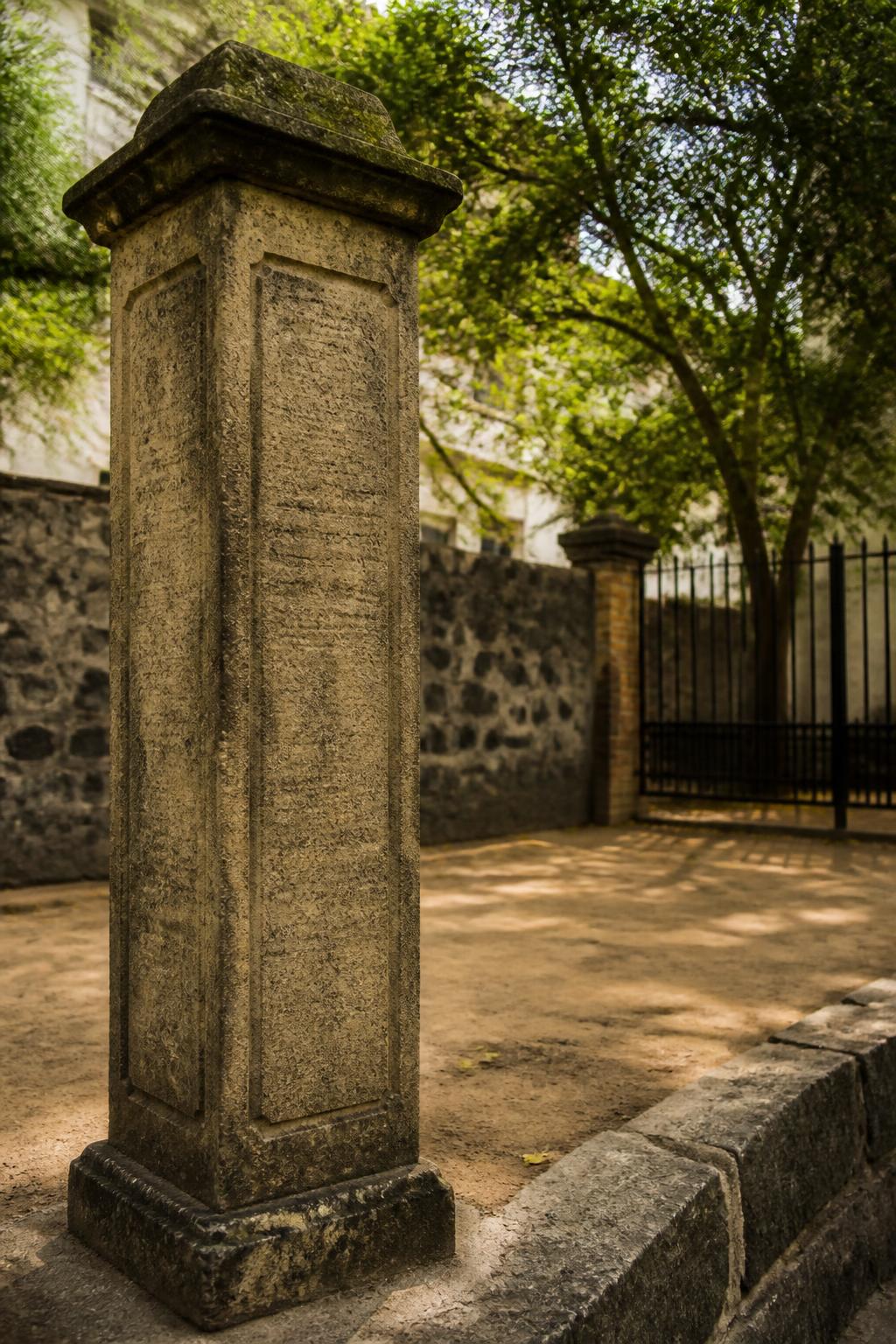
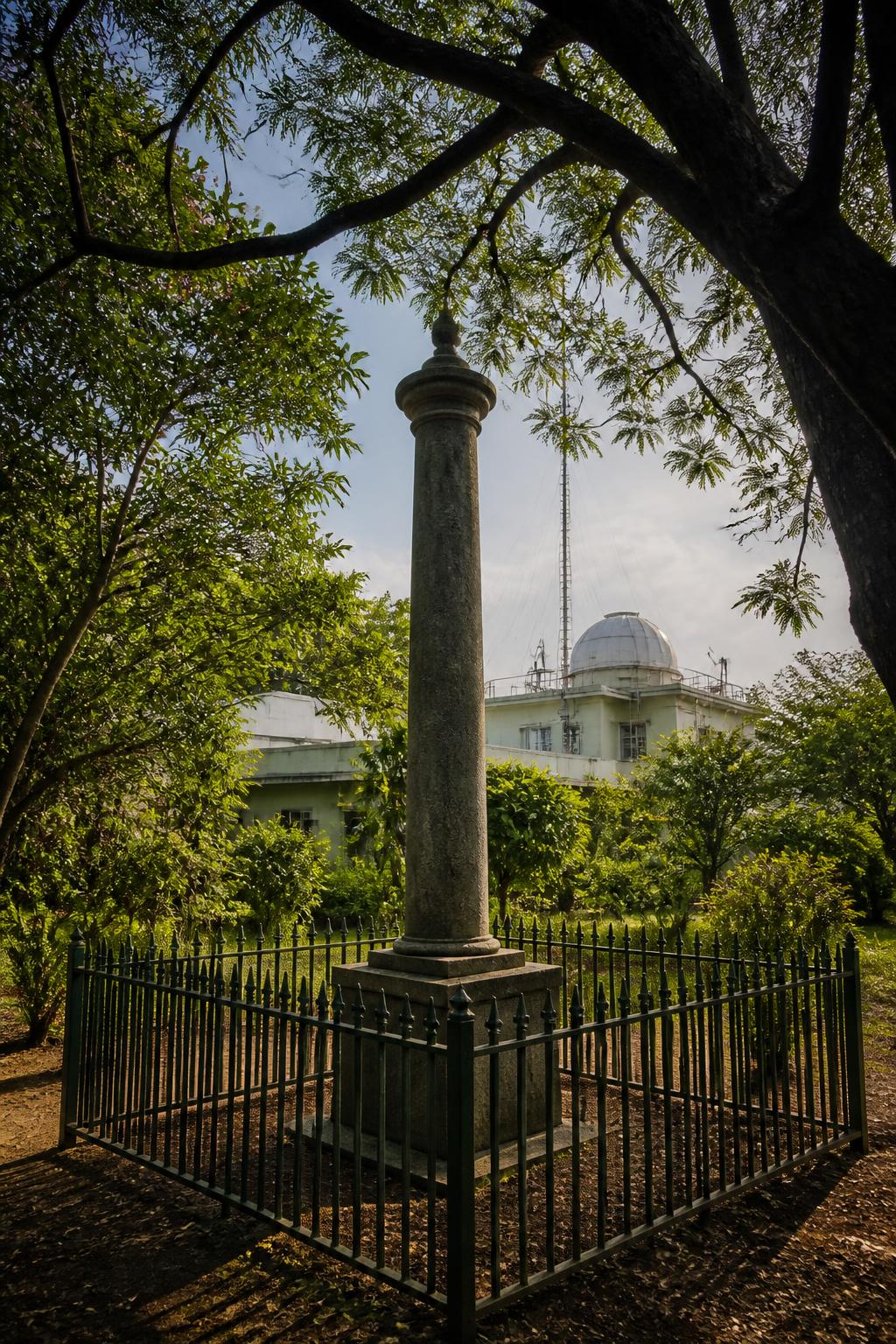
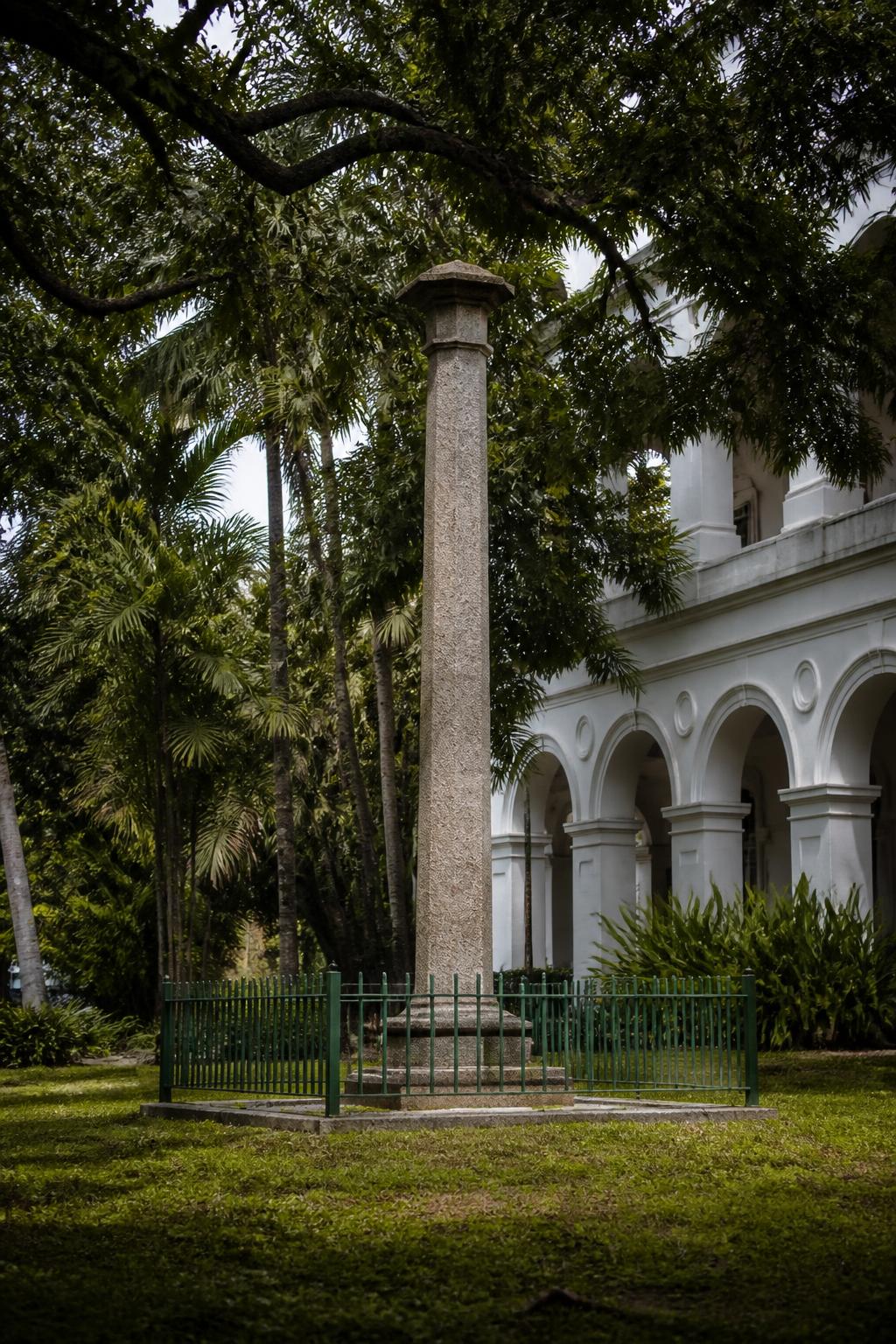
The original observatory no longer survives. What remains is more compact but unusually evocative: a granite pillar that carried the original transit instrument. The monument is now within the Regional Meteorological Centre compound in Chennai, a surviving fragment of the earlier observatory site. Its inscription appears in Latin, Tamil, Telugu and Hindustani. Those four languages are part of the object’s story, preserving the observatory’s identity in a form that can still be encountered in the modern city. The pillar turns an otherwise vanished institution into something tangible: a piece of the apparatus that once anchored astronomical measurement in Nungambakkam.